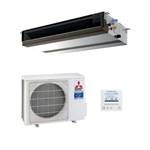
With the introduction of
Ducted indoor unit products, some information on duct
selection and design seems appropriate. Considering the
performance and design of these indoor units, selection and
proper duct sizing and installation will be necessary for
satisfactory application. The maximum available static
pressure from the low profile ducted indoor unit is 0.2”
H2O. With this in mind, the ductwork design must be taken into
consideration to ensure proper airflow to the space is
achieved. The emphasis should still be on moving refrigerant
and not air; not only will this help to work within the static
pressure available but it is also more efficient. Here are
some good practices when ducting the low profile unit.
• When reviewing static pressure duct loss in a system, the
longest duct run from the unit is the maximum static pressure
the unit will see.
• flexible ductwork,
while making installations simpler, can add unnecessary static
pressure loss if not utilized properly. Most of the static
pressure duct loss comes from allowing the duct work to sag.
Allowing even a 30% sag in the ductwork can increase the
static pressure loss up eight times. Flexible ductwork runs
should be kept to less than 15 feet. Elbows should be kept to
a minimum and made as wide as possible.
• Grilles should be selected so that the air velocity is
less than 500 ft per minute, this will help to minimize static
pressure loss.







 Mitsubishi Electric
PEAD-RP71JA heat pump inverter ducted units
Mitsubishi Electric
PEAD-RP71JA heat pump inverter ducted units